-
Thursday, May 28, 2009
Bukti Salah Guna Kuasa PDRM
Her full claims, according to the video from Malaysiakini are;
1) When she went to negotiate with the OCPD, he did not bother but asked someone else to push her away
2) When asked to disperse, they wanted to but Police locked the gate, preventing them from doing so, and entrapping them so as to capture them.
3) Some were beaten when arrested.
4) They were denied seeing their families
5) while there is a poster of Detainees Rules of 1953 which shows a right to visit by families and counsel, the police denied her one, saying it is an order from the top
6) She was asked to change in lock-up, which has no door but only grill, with CCTV.
7) Male policemen can go in and out of the female lock-up, of which a group of them chatting in front of the lock-up, issue of changing arises again
8) After arguing, the females are allowed to go inside a room to change into lock-up attire
9) In male lock-up, there is someone who has key open his own lock-up, and another person's lock-up, to beat him up.
10) Many detainees are detained for days without being informed of the reason for being detained.
11) During remand application, the Police's argument is that they need time to investigate them but for the long hours of being detained, no statement is taken, though there is a few of them chi chatting outside Jenice's lock-up. She asked if the detainees should be punished for Police inefficiency and for Police not doing their work.
This blogger felt, all the time, that even if a person is as guilty as hell, there are certain inalienable rights that should be accorded to him/her. Right to be punished up to the severity of his crime, right to dignity (that is need not to change under CCTV or in front of member of another sex, or any person in that matter), right to fair trial, right to be heard etc.
Police in Malaysia however, seems to be living in the grand old time of lawlessness, where they are the law.
The initiative to change however is not present at the moment. The present political climate needs them to be so. If the Police are all fair and serve the citizen without fear or favor, then the administration might be having a torrid time.
Wednesday, May 27, 2009
Recession Wipe USD$ 5B From Facebook Value
SAN FRANCISCO, May 27 — The Russian investors Digital Sky Technologies (DST) paid US$200 million (RM700 million) for a 2 per cent stake in Facebook yesterday, valuing the social networking site at US$10 billion – or two-thirds of what it was worth 18 months ago.
Facebook, which was founded in 2004 and remains a private company, sold a 1.6 per cent stake to Microsoft in October 2007 for US$240 million. That investment valued the whole company at US$15 billion.
The social networking site, which has more than 200 million users, said last night that DST was also looking to buy US$100 million of stock for existing shareholders. DST will not get a seat on the board.
Mark Zuckerberg, the chief executive of Facebook, said the deal with Microsoft was part of a larger partnership and that it had been signed at the “absolute peak of the market”.
The company said the value of the company had fallen because of “changes in the economy” which was in line with the rest of the market. The move to raise cash is part of a plan to fund growth, and Zuckerberg pointed out that the company did not have to raise the extra money.
Facebook said it had been approached by “a number of firms” over a potential cash injection but had chosen DST, a Russian group that specialises in internet investments, because of its “global perspective”.
Zuckerberg added that the company was not actively looking for any other investments at this time.
DST is based in Moscow and London. It is the largest investor in Russian-speaking and eastern European markets, but the Facebook stake is its most high profile international move.
Zuckerberg, who started Facebook when he was studying at Harvard University, said yesterday that despite the move to sell the almost 2 per cent stake, the company was in “no rush to go public any time soon”. The group turned down a US$1 billion takeover attempt from Yahoo in 2006. Zuckerberg added that the company expects to be “cash flow positive” by next year. — Independent
Facebook, which was founded in 2004 and remains a private company, sold a 1.6 per cent stake to Microsoft in October 2007 for US$240 million. That investment valued the whole company at US$15 billion.
The social networking site, which has more than 200 million users, said last night that DST was also looking to buy US$100 million of stock for existing shareholders. DST will not get a seat on the board.
Mark Zuckerberg, the chief executive of Facebook, said the deal with Microsoft was part of a larger partnership and that it had been signed at the “absolute peak of the market”.
The company said the value of the company had fallen because of “changes in the economy” which was in line with the rest of the market. The move to raise cash is part of a plan to fund growth, and Zuckerberg pointed out that the company did not have to raise the extra money.
Facebook said it had been approached by “a number of firms” over a potential cash injection but had chosen DST, a Russian group that specialises in internet investments, because of its “global perspective”.
Zuckerberg added that the company was not actively looking for any other investments at this time.
DST is based in Moscow and London. It is the largest investor in Russian-speaking and eastern European markets, but the Facebook stake is its most high profile international move.
Zuckerberg, who started Facebook when he was studying at Harvard University, said yesterday that despite the move to sell the almost 2 per cent stake, the company was in “no rush to go public any time soon”. The group turned down a US$1 billion takeover attempt from Yahoo in 2006. Zuckerberg added that the company expects to be “cash flow positive” by next year. — Independent
Rich Brother Rich Sister – A Review

Robert Kiyosaki and his sister Emi have written a book together. That may not sound so unusual until you realize one is a multi-millionaire and the other a Buddhist nun. Both openly and honestly share personal, and often intimate, details about their journey to find inner faith and financial peace.
Rich Brother Rich Sister – A Journal of Self-Discovery
Written almost as a journal of self-discovery Rich Brother Rich Sister by Robert Kiyosaki (Rich Dad Poor Dad) and his sister Emi Kiyosaki chronicles the years spent trying to build a life in balance and harmony with their personal and professional values and beliefs. Both siblings, on seemingly different career and life paths, were actually searching for the same thing - a higher spiritual purpose.
Robert the Vietnam warrior and Emi the peace activist, as opposite as they may seem are in fact more alike than they are different. Their parents instilled within them a sense of giving back. Robert’s mission evolved into teaching others how to make their way in the world by building self-sufficiency and financial freedom. Emi’s life became devoted to the teaching of Buddhism and working along side His Holiness the Dalai Lama.
Rich Brother Rich Sister chronicles a soul-searching inner journey of two siblings looking to find their professional, personal and spiritual place in the world.
The two paths became one when Emi became ill and needed medical attention. Concentrating time and effort on her faith and not on making money, Emi found herself in need of financial help from Robert. Robert concentrating time and effort on being a successful entrepreneur found a need to cultivate a more gentle spiritual side. Together the siblings helped and supported one another in discovering greater inner peace, purpose and spirituality.
Finding Purpose, Spirituality and Self-Sufficiency
Robert’s role as the older brother was to support Emi and her Buddhist beliefs while teaching her how to become more financially self-sufficient. Emi’s role was to help soften Robert’s rough edges and help open his heart to his own deep-seeded spirituality. As Robert put it, “I found more gentleness within myself while talking with my sister.”
You may want to classify this book as self-development but I would recommend you also look at Rich Brother Rich Sister as about financial abundance and finding true personal and professional purpose. Together, Robert and Emi Kiyosaki share an intimate and personal look at how they were able to bring out the “rich” person not only within themselves but also within each other.
Tuesday, May 26, 2009
National Ahievers Congress 2009 : How The Rich Get Richer
Pada 22-23 Jun 2009 saya telah menghadiri seminar berkaitan pendidikan kewangan (financial education) yg telah diadakan di MIECC (Mines International Exhibition & Convention Centre) dekat Sri Kembangan. Objektif utama seminar ini adalah untuk pendidikan kewangan serta mengenal pasti peluang2 pelaburan yg ada di masa krisis ekonomi global. Selari dengan tema yg digunakan iaitu "bagaimana org kaya jadi semakin kaya dan anda pun blh jadi kaya juga" ramai speaker2 terkenal bertaraf antarabangsa hadir berkongsi ilmu dan pengetahuan berkaitan perniagaan, kewangan dan pelaburan. Antaranya ialah Robert Kiyosaki dan isterinya Kim Kiyosaki, Blair Singer, Kelly Ritchie, Andy Tunner dan ramai lagi. Robert Kiyosaki menjadi speaker utama mengetengahkan konsep2 asas kewangan dan pelaburan seperti yang ditulisnya dalam buku Rich Dad Poor Dad, Rich Dad Guide To Investing dan Rich Dad Prophecy. Anggaran kehadiran peserta seramai lebih 2000 orang yg kebanyakannya rakyat Malaysia pelbagai lapisan umur dan bangsa. Ada pelajar IPT, usahawan, pesara , keja sendiri, kerja makan gai, si kaya, si miskin, si pokai dan lain2. Akan tetapi semuanya mempunyai 1 impian yg sama iaitu untuk menjadi kaya raya. Bayaran masuk ke seminar ini sebanyak rm 2000 untuk tiket biasa dan rm 5000 untuk tiket VIP. 
Sebagai speaker utama di majlis ini, Robert Toru Kiyosaki menjadi perhatian ramai memulakan majlis pada pkl 930 pagi. Untuk maklumat umum Robert Kiyosaki adalah seorang penulis, pelabur, speaker, pakar motivasi yg agak terkenal di seluruh dunia. Beliau di lahirkan di India dan dibesarkan di Hawai adalah keturunan Jepun-Amerika generasi ke-4. Bukunya yg amat terkenal Rich Dad Poor Dad telah terjual lebih 27 salinan diseluruh dunia. Selepas tamat sekolah tinggi di Hilo High School, beliau menyambung pelajaran ke U.S Merchant Marine Academy, selepas itu berkhidmat dgn Marines Corp sebagai juruterbang Helikopter bersenjata semasa perang Vietnam. Secara amnya beliau tidak mempunyai tahap pendidikan yang tinggi namun mampu mencapai kekayaan hebat hasil usaha dan kesungguhan serta pemikiran yang diluar kebiasaan ramai. Telah berkahwin dengan Kim Kiyosaki lebih 22 tahun, pasangan suami isteri ini adalah merupakan pasukan yg mantap dari segi pelaburan dan pendidikan kewangan. Robert Kiyosaki mempunyai seorang kakak iaitu Emi Kiyosaki yang merupakan seorang sami buddha.
Dipermulaan seminar Robert Kiyosaki memperkenalkan senarai speaker2 seorang demi seorang, kemudian beliau menerangkan keadaan ekonomi semasa di Amerika Syarikat khasnya dan di seluruh dunia amnya. Beliau mengkritik cara Presiden Obama menguruskan ekonomi walaupun pada mata kasar nampak menyakinkan, namun tahap ekonomi Amerika Syarikat masih membimbangkan, tambahan pula nilai Dollar Amerika yang semakin menyusut akibat cetakan yg terlampau banyak. Semua ini adalah satu krisis yg amat besar semenjak Great Depression pada tahun 30an namun inilah juga peluang yang hebat untuk orang yg tahu untuk mengambil peluang ini membina kekayaan yg banyak pada masa yang singkat. Jadi Robert Kiyosaki mengajak pada peserta mengubah cara pemikiran, berfikir dari perspektif seorang usahawan dan pelabur untuk melihat dan mengambil peluang yg ada di masa kini.
Beliau yang menekankan pelaburan hartanah (real estate) menerangkan mengapa beliau minat dgn pelaburan jenis ini, antaranya ialah pasaran hartanah agak mantap, tangible (blh dilihat), ada insurance, ada pinjaman bank serta kalis inflasi (inflasion proof). Beliau juga menceritakan bagaimana kisah mula2 dia terlibat dgn bidang jualan semasa bekerja dgn Xerox Corporation sebagai seorang jurujual mesin photostat yg hampir dibuang kerja, memulakan perniagaan sendiri secara kecil-kecilan serta memulakan pelaburan hartanah secara kecil-kecilan. Konsep pelaburan yg beliau tekankan lebih kepada aliran tunai (cash flow) berbanding untung modal (capital gain) kerana pelaburan jenis ini lebih mantap, pantas dan berisiko rendah. Kini beliau mempunyai portfolio pelaburan yg hebat seperti telaga minyak, logam berharga, syarikat2, hartanah2 dan lain2. Katanya nilai pelaburannya semakain berkembang tak kira sama ada ekonomi bagus ataupun ekonomi meleset.
Speaker ke-2 yang menyampaikan ceramah ialah kakak kandung Robert Kiyosaki sendiri iaitu Emi Kiyosaki. Ternyata Emi Kiyosaki mempunyai personaliti yg amat berbeza dari Robert Kiyosaki, beliau memilih untuk menjadi seorang sami buddha yg taksub dengan Dalai Lama. Beliau menekankan konsep kekayaan spiritual yg mempunya hubungan dengan kekayaan meterial. Berpakaian seperti seorang sami Buddha beliau menceritakan kisah2 hidup beliau dan bagaimana dia blh menjadi seorang sami Buddha. Pemikiran beliau sewaktu mula2 menjadi seorang sami dan pada masa kini telah byk berubah sejak beliau blajar pendidikan kewangan dgn adiknya Robert Kiyosaki. Walaupun masih menjadi seorang sami, beliau mula memikirkan tentang kewangan, kekayaan dan pelaburan. Tindakannya itu telah mendapat kritikan dari sami2 buddha yang lain. Semua ini ada diceritakan dalam bukunya iaitu Rich Brother Rich Sister
Pada hari ke-2 Robert Kiyosaki menerangkan dgn lebih terperinci sebab2 yg menyebabkan krisis ekonomi global yg bermula di Amerika Syarikat. Beliau mengkritik cara Presiden Obama menangani krisis eknomi dan kewangan Amerika dgn membuat ‘bail out’ terhadap bank2 yang sedang muflis, juga Presiden Obama gagal mengotakan slogan semasa kempen pilihanraya presiden iaitu ‘Change We Can Believe’ , di mana kebanyakan anggota2 pentadbiran baru beliau yang mentadbir kewangan dan ekonomi kebanyakannya dari bekas anggota2 yg berkhidmat dgn Presiden Bill Clinton. Jadi tiada usaha perubahan yg jelas dalam menangani krisis ekonomi global ini. Juga beliau sangsi dgn fungsi Federal Reserve yang bukannya milik kerajaan Amerika, ianya dikuasai oleh individu2 dan syarikat2 persendirian yg kaya serta tamak. Federal Reserve telah menyebabkan berlaku Great Depression pada tahun 1930an dan krisis ekonomi ekonomi global skrg. Federal Reserve mempunyai kuasa yg lebih hebat dari kerajaan Amerika dalam bidang kewangan dan perbankan, ianya mempunyai kuasa untuk mencetak wang yg menyebabkan berlakunya kemerosotan pada nilai Dollar Amerika. Sepatutnya Federal Reserve mesti digantikan dgn bank pusat Amerika yg dimiliki sepenuhnya oleh kerajaan Amerika, barulah setiap tindakan akan lebih beretika, telus dan tiada berkepentingan luar. Antara keluarga kaya raya yg dipercayai mengawal Federal Reserve ialah Rockerfeller dan JP Morgon yg memiliki kekayaan bernilai lebih 1 Trilion USD. Dalam bukunya yang terbaru bertaju Conspiracy Of The Rich, Robert Kiyosaki menerangkan lebih detail berkenaan Federal Reserve, Barrack Obama, system perbankan, dan lain2 lagi. Buku ini blh dibaca secara percuma di laman web :- www.conspiracyoftherich.com
Speaker lain pada hari ke-2 ialah Dr Radha Gopalan yg berasal dari India tetapi menetap di Amerika. Beliau ialah seorang pakar pembedahan jantung. Beliau yg membuat pembedahan jantung Robert Kiyosaki pada thn lepas. Dalam ceramahnya beliau menekankan konsep asas kesihatan adalah sama dgn konsep asas kekayaan. Kita blh tentukan kesihatan pada masa akan datang, kalau kita nak jadi seorang yang sihat maka kita mestilah mempunyai pemikiran yang sihat, fikir cara positif, blh kawal emosi, blh selesaikan mslh dan juga kena amalkan sikap serta perangai yang positif.
Hasil permerhatian beliau, ramai pesakit2 yg menghadapi penyakit2 seperti masalah jantung, buah pinggang, dan juga barah adalah disebabkan oleh cara pemikiran yang tidak sihat seperti mengamalkan perasaan benci, dendam, sedih, tekanan perasaan, kurang inisiatif, kurang motivasi, tidak bersemangat, tidak suka pada kerja seharian, tidak cintakan pasangan, takut hadapi risiko dan masalah, lari dari masalah, rasa bersalah , membuat sesautu yg bertentangan dgn prinsip, bercakap bohong, hidup dalam ketakutan, hidup dalam penafian, menghisap rokok dan hisap serta lain2 lagi gaya hidup yg kurang sihat.
Sebenarnya penyakit bermula di peringkat emosi, jika kita nak hidup dgn sihat maka kita perlu pandai kawal emosi secara berkesan bermula dari usia yang muda. Contoh emosi seseorang ialah seperti cinta, benci, takut, berani, sedih, marah, tak puas hati dan sebagainya. Orang2 yg sihat selalunya mengamalkan pemikiran yg sihat, cara hidup yg sihat dan pemakanan yg sihat. Kekayaan material tanpa kesihatan yg baik tiada gunanya. Kita mesti merayakan kehidupan (live your life to the fullest).
Speaker seterusnya ialah Andy Tanner yg merupakan pakar dalam bidang stock dan option. Beliau menerangkan peluang2 yg ada dalam pasaran saham seluruh dunia semasa krisis ekonomi gobal ini. Pergerakan harga saham yg pantas serta tidak menentu dimasa sekarang menyebabkan seseorang pelabur itu memerlukan perisian yg terkini untuk memantau serta membantu membuat keputusan bila masa yg sesuai untuk masuk dan keluar dari pasaran saham. Teknik lama seperti melabur untuk jangkamasa panjang sudah tidak sesuai lagi pada masa sekarang, segalanya telah berubah, anggaran tempoh pelaburan yg berkesan adalah antara 1 bulan ke 1 tahun sahaja, bergantung kpd analisis fundamental pasaran dan syarikat, dan analisis teknikal. Dengan menggunakan teknologi internet semua orang didunia ini yg mempunyai akses kpd internet blh membuat pelaburan di pasaran saham Amerika, Australia, Hong Kong menerusi internet sahaja.
Speaker2 lain yg tak tak kurang hebat juga adalah seperti Kathy Heasley seorang pakar penjenamaan (branding), Ken McElroy seorang pakar Hartanah, Michael Maloney seorang pakar pelaburan komoditi seperti emas dan gangsa, Kelly Ritchie seorang pakar perniagaan franchise. Segala keseluruhannya seminar ini agak menarik bg sy kerana dapat mengetahui maklumat2 terkini pasaran kewangan, pendapat2 pakar2 dalam bidang pelaburan dan kewangan serta dapat ramai kenalan serta rangkaian baru dalam pelbagai bidang seperti network marketing, hartanah, saham,forex dan banyak lagi...


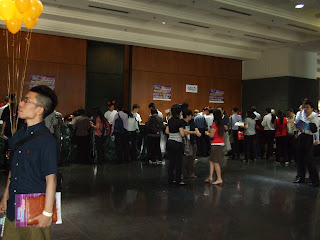


Sebagai speaker utama di majlis ini, Robert Toru Kiyosaki menjadi perhatian ramai memulakan majlis pada pkl 930 pagi. Untuk maklumat umum Robert Kiyosaki adalah seorang penulis, pelabur, speaker, pakar motivasi yg agak terkenal di seluruh dunia. Beliau di lahirkan di India dan dibesarkan di Hawai adalah keturunan Jepun-Amerika generasi ke-4. Bukunya yg amat terkenal Rich Dad Poor Dad telah terjual lebih 27 salinan diseluruh dunia. Selepas tamat sekolah tinggi di Hilo High School, beliau menyambung pelajaran ke U.S Merchant Marine Academy, selepas itu berkhidmat dgn Marines Corp sebagai juruterbang Helikopter bersenjata semasa perang Vietnam. Secara amnya beliau tidak mempunyai tahap pendidikan yang tinggi namun mampu mencapai kekayaan hebat hasil usaha dan kesungguhan serta pemikiran yang diluar kebiasaan ramai. Telah berkahwin dengan Kim Kiyosaki lebih 22 tahun, pasangan suami isteri ini adalah merupakan pasukan yg mantap dari segi pelaburan dan pendidikan kewangan. Robert Kiyosaki mempunyai seorang kakak iaitu Emi Kiyosaki yang merupakan seorang sami buddha.
Dipermulaan seminar Robert Kiyosaki memperkenalkan senarai speaker2 seorang demi seorang, kemudian beliau menerangkan keadaan ekonomi semasa di Amerika Syarikat khasnya dan di seluruh dunia amnya. Beliau mengkritik cara Presiden Obama menguruskan ekonomi walaupun pada mata kasar nampak menyakinkan, namun tahap ekonomi Amerika Syarikat masih membimbangkan, tambahan pula nilai Dollar Amerika yang semakin menyusut akibat cetakan yg terlampau banyak. Semua ini adalah satu krisis yg amat besar semenjak Great Depression pada tahun 30an namun inilah juga peluang yang hebat untuk orang yg tahu untuk mengambil peluang ini membina kekayaan yg banyak pada masa yang singkat. Jadi Robert Kiyosaki mengajak pada peserta mengubah cara pemikiran, berfikir dari perspektif seorang usahawan dan pelabur untuk melihat dan mengambil peluang yg ada di masa kini.

Beliau yang menekankan pelaburan hartanah (real estate) menerangkan mengapa beliau minat dgn pelaburan jenis ini, antaranya ialah pasaran hartanah agak mantap, tangible (blh dilihat), ada insurance, ada pinjaman bank serta kalis inflasi (inflasion proof). Beliau juga menceritakan bagaimana kisah mula2 dia terlibat dgn bidang jualan semasa bekerja dgn Xerox Corporation sebagai seorang jurujual mesin photostat yg hampir dibuang kerja, memulakan perniagaan sendiri secara kecil-kecilan serta memulakan pelaburan hartanah secara kecil-kecilan. Konsep pelaburan yg beliau tekankan lebih kepada aliran tunai (cash flow) berbanding untung modal (capital gain) kerana pelaburan jenis ini lebih mantap, pantas dan berisiko rendah. Kini beliau mempunyai portfolio pelaburan yg hebat seperti telaga minyak, logam berharga, syarikat2, hartanah2 dan lain2. Katanya nilai pelaburannya semakain berkembang tak kira sama ada ekonomi bagus ataupun ekonomi meleset.
Speaker ke-2 yang menyampaikan ceramah ialah kakak kandung Robert Kiyosaki sendiri iaitu Emi Kiyosaki. Ternyata Emi Kiyosaki mempunyai personaliti yg amat berbeza dari Robert Kiyosaki, beliau memilih untuk menjadi seorang sami buddha yg taksub dengan Dalai Lama. Beliau menekankan konsep kekayaan spiritual yg mempunya hubungan dengan kekayaan meterial. Berpakaian seperti seorang sami Buddha beliau menceritakan kisah2 hidup beliau dan bagaimana dia blh menjadi seorang sami Buddha. Pemikiran beliau sewaktu mula2 menjadi seorang sami dan pada masa kini telah byk berubah sejak beliau blajar pendidikan kewangan dgn adiknya Robert Kiyosaki. Walaupun masih menjadi seorang sami, beliau mula memikirkan tentang kewangan, kekayaan dan pelaburan. Tindakannya itu telah mendapat kritikan dari sami2 buddha yang lain. Semua ini ada diceritakan dalam bukunya iaitu Rich Brother Rich Sister
Pada hari ke-2 Robert Kiyosaki menerangkan dgn lebih terperinci sebab2 yg menyebabkan krisis ekonomi global yg bermula di Amerika Syarikat. Beliau mengkritik cara Presiden Obama menangani krisis eknomi dan kewangan Amerika dgn membuat ‘bail out’ terhadap bank2 yang sedang muflis, juga Presiden Obama gagal mengotakan slogan semasa kempen pilihanraya presiden iaitu ‘Change We Can Believe’ , di mana kebanyakan anggota2 pentadbiran baru beliau yang mentadbir kewangan dan ekonomi kebanyakannya dari bekas anggota2 yg berkhidmat dgn Presiden Bill Clinton. Jadi tiada usaha perubahan yg jelas dalam menangani krisis ekonomi global ini. Juga beliau sangsi dgn fungsi Federal Reserve yang bukannya milik kerajaan Amerika, ianya dikuasai oleh individu2 dan syarikat2 persendirian yg kaya serta tamak. Federal Reserve telah menyebabkan berlaku Great Depression pada tahun 1930an dan krisis ekonomi ekonomi global skrg. Federal Reserve mempunyai kuasa yg lebih hebat dari kerajaan Amerika dalam bidang kewangan dan perbankan, ianya mempunyai kuasa untuk mencetak wang yg menyebabkan berlakunya kemerosotan pada nilai Dollar Amerika. Sepatutnya Federal Reserve mesti digantikan dgn bank pusat Amerika yg dimiliki sepenuhnya oleh kerajaan Amerika, barulah setiap tindakan akan lebih beretika, telus dan tiada berkepentingan luar. Antara keluarga kaya raya yg dipercayai mengawal Federal Reserve ialah Rockerfeller dan JP Morgon yg memiliki kekayaan bernilai lebih 1 Trilion USD. Dalam bukunya yang terbaru bertaju Conspiracy Of The Rich, Robert Kiyosaki menerangkan lebih detail berkenaan Federal Reserve, Barrack Obama, system perbankan, dan lain2 lagi. Buku ini blh dibaca secara percuma di laman web :- www.conspiracyoftherich.com
Speaker lain pada hari ke-2 ialah Dr Radha Gopalan yg berasal dari India tetapi menetap di Amerika. Beliau ialah seorang pakar pembedahan jantung. Beliau yg membuat pembedahan jantung Robert Kiyosaki pada thn lepas. Dalam ceramahnya beliau menekankan konsep asas kesihatan adalah sama dgn konsep asas kekayaan. Kita blh tentukan kesihatan pada masa akan datang, kalau kita nak jadi seorang yang sihat maka kita mestilah mempunyai pemikiran yang sihat, fikir cara positif, blh kawal emosi, blh selesaikan mslh dan juga kena amalkan sikap serta perangai yang positif.
Hasil permerhatian beliau, ramai pesakit2 yg menghadapi penyakit2 seperti masalah jantung, buah pinggang, dan juga barah adalah disebabkan oleh cara pemikiran yang tidak sihat seperti mengamalkan perasaan benci, dendam, sedih, tekanan perasaan, kurang inisiatif, kurang motivasi, tidak bersemangat, tidak suka pada kerja seharian, tidak cintakan pasangan, takut hadapi risiko dan masalah, lari dari masalah, rasa bersalah , membuat sesautu yg bertentangan dgn prinsip, bercakap bohong, hidup dalam ketakutan, hidup dalam penafian, menghisap rokok dan hisap serta lain2 lagi gaya hidup yg kurang sihat.
Sebenarnya penyakit bermula di peringkat emosi, jika kita nak hidup dgn sihat maka kita perlu pandai kawal emosi secara berkesan bermula dari usia yang muda. Contoh emosi seseorang ialah seperti cinta, benci, takut, berani, sedih, marah, tak puas hati dan sebagainya. Orang2 yg sihat selalunya mengamalkan pemikiran yg sihat, cara hidup yg sihat dan pemakanan yg sihat. Kekayaan material tanpa kesihatan yg baik tiada gunanya. Kita mesti merayakan kehidupan (live your life to the fullest).
Speaker seterusnya ialah Andy Tanner yg merupakan pakar dalam bidang stock dan option. Beliau menerangkan peluang2 yg ada dalam pasaran saham seluruh dunia semasa krisis ekonomi gobal ini. Pergerakan harga saham yg pantas serta tidak menentu dimasa sekarang menyebabkan seseorang pelabur itu memerlukan perisian yg terkini untuk memantau serta membantu membuat keputusan bila masa yg sesuai untuk masuk dan keluar dari pasaran saham. Teknik lama seperti melabur untuk jangkamasa panjang sudah tidak sesuai lagi pada masa sekarang, segalanya telah berubah, anggaran tempoh pelaburan yg berkesan adalah antara 1 bulan ke 1 tahun sahaja, bergantung kpd analisis fundamental pasaran dan syarikat, dan analisis teknikal. Dengan menggunakan teknologi internet semua orang didunia ini yg mempunyai akses kpd internet blh membuat pelaburan di pasaran saham Amerika, Australia, Hong Kong menerusi internet sahaja.
Speaker2 lain yg tak tak kurang hebat juga adalah seperti Kathy Heasley seorang pakar penjenamaan (branding), Ken McElroy seorang pakar Hartanah, Michael Maloney seorang pakar pelaburan komoditi seperti emas dan gangsa, Kelly Ritchie seorang pakar perniagaan franchise. Segala keseluruhannya seminar ini agak menarik bg sy kerana dapat mengetahui maklumat2 terkini pasaran kewangan, pendapat2 pakar2 dalam bidang pelaburan dan kewangan serta dapat ramai kenalan serta rangkaian baru dalam pelbagai bidang seperti network marketing, hartanah, saham,forex dan banyak lagi...


Students suffer as Govt delays decision
THE Education Ministry will make a decision on the teaching of Science and Mathematics in English within six months (The Star, May 24).
This will take us to November 2009. It means that change, if any, will only be introduced from the 2010 school year.
Apparently, the ministry wants more feedback. It really boggles me as to which truly concerned bodies/parties/organisations that have yet to voice their opinions on the policy, given that one whole year has already been allocated for the said purposes.
Earlier in the year, the ministry announced that it had readied a comprehensive report based on months of deliberations. The report proposed seven options for adoption. One of them recommended a total reversal of the policy.
The report, in the form of a memorandum, was to be circulated to all Cabinet members for a final decision.
The decision sought was said to be not necessarily just a single option but rather a combination of any of the seven options proposed. What has become of that initiative?
One obvious backlash of the delay in decision making is the negative effect it has in classroom teaching in all schools. The teaching medium has become a kind of free-for-all now.
In primary schools, we hear of national school teachers going back to teaching in Malay and vernacular school teachers doing the same in Chinese or Tamil. In secondary schools, it is a mixture of English and Malay. Only teachers proficient in English choose to continue teaching in English.
I am afraid the stalemate in the last one year has set back much of the hard-earned progress we made in the past six years.
The ministry must seriously take note of this development. A decision has to be made and made soon as the clock is ticking and our children and their concerned parents are eagerly waiting.
Perhaps, the ministry is trying too hard to arrive at the right solution, one that can please all parties.
Months of deliberations have made one thing clear. There can be no single, agreed right solution.
We can continue to argue and debate until the cow comes home, but there will still be no agreement on one right solution that would please all or even most parties.
I would like to think that it is the right of the ministry to make that final decision, and back it up with a forceful rationale before presenting it to the Cabinet for approval.
This will take us to November 2009. It means that change, if any, will only be introduced from the 2010 school year.
Apparently, the ministry wants more feedback. It really boggles me as to which truly concerned bodies/parties/organisations that have yet to voice their opinions on the policy, given that one whole year has already been allocated for the said purposes.
Earlier in the year, the ministry announced that it had readied a comprehensive report based on months of deliberations. The report proposed seven options for adoption. One of them recommended a total reversal of the policy.
The report, in the form of a memorandum, was to be circulated to all Cabinet members for a final decision.
The decision sought was said to be not necessarily just a single option but rather a combination of any of the seven options proposed. What has become of that initiative?
One obvious backlash of the delay in decision making is the negative effect it has in classroom teaching in all schools. The teaching medium has become a kind of free-for-all now.
In primary schools, we hear of national school teachers going back to teaching in Malay and vernacular school teachers doing the same in Chinese or Tamil. In secondary schools, it is a mixture of English and Malay. Only teachers proficient in English choose to continue teaching in English.
I am afraid the stalemate in the last one year has set back much of the hard-earned progress we made in the past six years.
The ministry must seriously take note of this development. A decision has to be made and made soon as the clock is ticking and our children and their concerned parents are eagerly waiting.
Perhaps, the ministry is trying too hard to arrive at the right solution, one that can please all parties.
Months of deliberations have made one thing clear. There can be no single, agreed right solution.
We can continue to argue and debate until the cow comes home, but there will still be no agreement on one right solution that would please all or even most parties.
I would like to think that it is the right of the ministry to make that final decision, and back it up with a forceful rationale before presenting it to the Cabinet for approval.
Temporary marriages with Indonesian women on rise
P.K. Abdul Ghafour | Arab News
JEDDAH: A large number of Saudis are engaging in temporary marriages with Indonesian women with the intention of divorcing them.
“Such marriages are likely to increase if Islamic scholars fail to give a clear ruling prohibiting them,” said Khaled Al-Arrak, director of Saudi affairs at the Saudi Embassy in Jakarta.
He said most Saudis were engaged in such marriages without realizing their consequences. “Some poor Indonesians marry off their girls to Saudis hoping it would put an end to their poverty and miseries. If the Council of Senior Islamic Scholars does not ban this type of marriages, things will go out of control,” Al-Arrak warned.
There are so many offices in Indonesia that facilitate such marriages, Al-Watan Arabic daily said. The marriage takes place in the presence of witnesses and a man posing as the father of the bride.
These women do not know that their marriages would end within a few days and that they would have to bear children of people who would abandon them.
Last year, the Saudi Embassy in Jakarta received 82 calls regarding children of Saudis who had married Indonesian women and then abandoned them. “We have received 18 such calls from abandoned Indonesian wives of Saudis and their children this year so far,” Al-Arrak said.
The Saudi Embassy official said that the cases registered with the embassy accounted for only 20 percent of such marriages that have actually taken place.
Aysha Noor, 22, an Indonesian woman from Sikka Bhumi, 160 km east of Jakarta, said her parents married her to a young Saudi man when she was 16, thinking it would be a blessing for the family and end their poverty.
“We in Indonesia consider people of Makkah and Madinah as blessed ones. The man gave me a dowry of six million Indonesian rupiahs (SR2,024). The dowry helped us to solve some of our economic problems. My family did not know that the man was intending to have a temporary marriage.”
She adds: “After a few days he paid us the remaining amount of three million rupiahs (SR1,011) and left the country.” Noor said she later had a similar marriage with another Saudi before finding a job at a nightclub as a singer and dancer.
There are many women in Indonesia who have similar stories to tell. Some of them find it difficult to look after their children from Saudi husbands. The Saudi Embassy in Jakarta registers such Saudi children and helps them travel to the Kingdom to recognize their fathers but many refuse to accept them.
The embassy also receives visa requests for marriages, particularly for people of special needs and elderly who want to marry Indonesian women. These marriages often fail because the Saudi society treats them as maids and they cannot merge with the society primarily because of language barrier. Such marriages cost between SR5,000 and SR10,000.
S.P. Dharmakirty, consul for information at the Indonesian Consulate in Jeddah, confirmed that temporary marriages involving Saudis were taking place in his country.
“Indonesian authorities have taken appropriate measures to curb this practice,” he told Arab News, adding that some people involved in such illegal marriages have been detained.
The consul also pointed out that the marriage of some Indonesian women with elderly and handicapped Saudis was not legal.
“We face many problems because such marriages are not registered and the women coming from Indonesia use visa for maids to come to the Kingdom,” he said. “Some of them later come to consulate to seek advice,” he added
JEDDAH: A large number of Saudis are engaging in temporary marriages with Indonesian women with the intention of divorcing them.
“Such marriages are likely to increase if Islamic scholars fail to give a clear ruling prohibiting them,” said Khaled Al-Arrak, director of Saudi affairs at the Saudi Embassy in Jakarta.
He said most Saudis were engaged in such marriages without realizing their consequences. “Some poor Indonesians marry off their girls to Saudis hoping it would put an end to their poverty and miseries. If the Council of Senior Islamic Scholars does not ban this type of marriages, things will go out of control,” Al-Arrak warned.
There are so many offices in Indonesia that facilitate such marriages, Al-Watan Arabic daily said. The marriage takes place in the presence of witnesses and a man posing as the father of the bride.
These women do not know that their marriages would end within a few days and that they would have to bear children of people who would abandon them.
Last year, the Saudi Embassy in Jakarta received 82 calls regarding children of Saudis who had married Indonesian women and then abandoned them. “We have received 18 such calls from abandoned Indonesian wives of Saudis and their children this year so far,” Al-Arrak said.
The Saudi Embassy official said that the cases registered with the embassy accounted for only 20 percent of such marriages that have actually taken place.
Aysha Noor, 22, an Indonesian woman from Sikka Bhumi, 160 km east of Jakarta, said her parents married her to a young Saudi man when she was 16, thinking it would be a blessing for the family and end their poverty.
“We in Indonesia consider people of Makkah and Madinah as blessed ones. The man gave me a dowry of six million Indonesian rupiahs (SR2,024). The dowry helped us to solve some of our economic problems. My family did not know that the man was intending to have a temporary marriage.”
She adds: “After a few days he paid us the remaining amount of three million rupiahs (SR1,011) and left the country.” Noor said she later had a similar marriage with another Saudi before finding a job at a nightclub as a singer and dancer.
There are many women in Indonesia who have similar stories to tell. Some of them find it difficult to look after their children from Saudi husbands. The Saudi Embassy in Jakarta registers such Saudi children and helps them travel to the Kingdom to recognize their fathers but many refuse to accept them.
The embassy also receives visa requests for marriages, particularly for people of special needs and elderly who want to marry Indonesian women. These marriages often fail because the Saudi society treats them as maids and they cannot merge with the society primarily because of language barrier. Such marriages cost between SR5,000 and SR10,000.
S.P. Dharmakirty, consul for information at the Indonesian Consulate in Jeddah, confirmed that temporary marriages involving Saudis were taking place in his country.
“Indonesian authorities have taken appropriate measures to curb this practice,” he told Arab News, adding that some people involved in such illegal marriages have been detained.
The consul also pointed out that the marriage of some Indonesian women with elderly and handicapped Saudis was not legal.
“We face many problems because such marriages are not registered and the women coming from Indonesia use visa for maids to come to the Kingdom,” he said. “Some of them later come to consulate to seek advice,” he added
Monster-In-Law
KUALA LUMPUR: Parents-in-law or, more specifically, mother-in-law horror stories are widespread and with good reason as a study by the National Population and Family Development Board (LPPKN) shows.
Meddlesome in-laws are the main reason Indian couples divorce but it figures as one of the top reasons for divorce among Chinese and Malay couples, too.
The Malaysia Community and Family Study 2004 showed that the two other factors are incompatibility at 42.3% and infidelity at 12%.
“Interference of in-laws is the main reason why Indians divorce. It is the top ranked reason at 30%,” said LPPKN Director General Datuk Aminah Abdul Rahman when presenting a paper on Malaysia’s family profile and its effects Monday at Institut Kefahaman Islam Malaysia.
Infidelity is a deal breaker in Malay and Indian marriages but it appears to be tolerated among the Chinese.
“Among Malays, the second most common reason for a divorce is infidelity and a refusal to put up with polygamy (enggan dimadukan),” she said.
“In the Indian community, infidelity is the second highest ranked reason for divorce at 25%,” she said.
However, the Chinese considered infidelity the least crucial reason to demand a divorce. Cheating nestled at the bottom along with health and gambling addiction reasons at 4.2%.
Surprisingly, abuse is not a reason for divorce among the Malays and Chinese, but is a known reason among Indians at 5%.
“Another overall reason that ranked high among the three races at 11.5% is ‘not being responsible’,” she said.
She explained that though the family institution was perceived as quite fragile and divorces rampant, the data showed otherwise.
“According to a population survey in 2000, only a portion of the population at 0.7% is divorced,” she said.
The data showed that divorce is more likely to happen to those in the age group under 25 and above 40.
Meddlesome in-laws are the main reason Indian couples divorce but it figures as one of the top reasons for divorce among Chinese and Malay couples, too.
The Malaysia Community and Family Study 2004 showed that the two other factors are incompatibility at 42.3% and infidelity at 12%.
“Interference of in-laws is the main reason why Indians divorce. It is the top ranked reason at 30%,” said LPPKN Director General Datuk Aminah Abdul Rahman when presenting a paper on Malaysia’s family profile and its effects Monday at Institut Kefahaman Islam Malaysia.
Infidelity is a deal breaker in Malay and Indian marriages but it appears to be tolerated among the Chinese.
“Among Malays, the second most common reason for a divorce is infidelity and a refusal to put up with polygamy (enggan dimadukan),” she said.
“In the Indian community, infidelity is the second highest ranked reason for divorce at 25%,” she said.
However, the Chinese considered infidelity the least crucial reason to demand a divorce. Cheating nestled at the bottom along with health and gambling addiction reasons at 4.2%.
Surprisingly, abuse is not a reason for divorce among the Malays and Chinese, but is a known reason among Indians at 5%.
“Another overall reason that ranked high among the three races at 11.5% is ‘not being responsible’,” she said.
She explained that though the family institution was perceived as quite fragile and divorces rampant, the data showed otherwise.
“According to a population survey in 2000, only a portion of the population at 0.7% is divorced,” she said.
The data showed that divorce is more likely to happen to those in the age group under 25 and above 40.
Subscribe to:
Posts (Atom)